The Design Evolution of Elon Musk Collectible Badges Over Time
 By
By
The Design Evolution of Elon Musk Collectible Badges Over Time
In the world of collectibles, few figures have captured the imagination of enthusiasts quite like Elon Musk. From Tesla’s groundbreaking electric vehicles to SpaceX’s ambitious Mars missions, Musk’s ventures have inspired a unique collecting culture that extends far beyond traditional memorabilia. Among the most fascinating items in this ecosystem are Elon Musk collectible badges, which have undergone a remarkable design evolution that mirrors both technological advancement and the entrepreneur’s own journey through various industries.
These badges represent more than simple fan merchandise. They’ve become tangible symbols of innovation, entrepreneurship, and the relentless pursuit of seemingly impossible goals. As we trace their design evolution, we discover a visual narrative that reflects changing aesthetics, manufacturing capabilities, and the growing sophistication of collector communities worldwide.
Early Days: Simple Beginnings and PayPal Era Influences
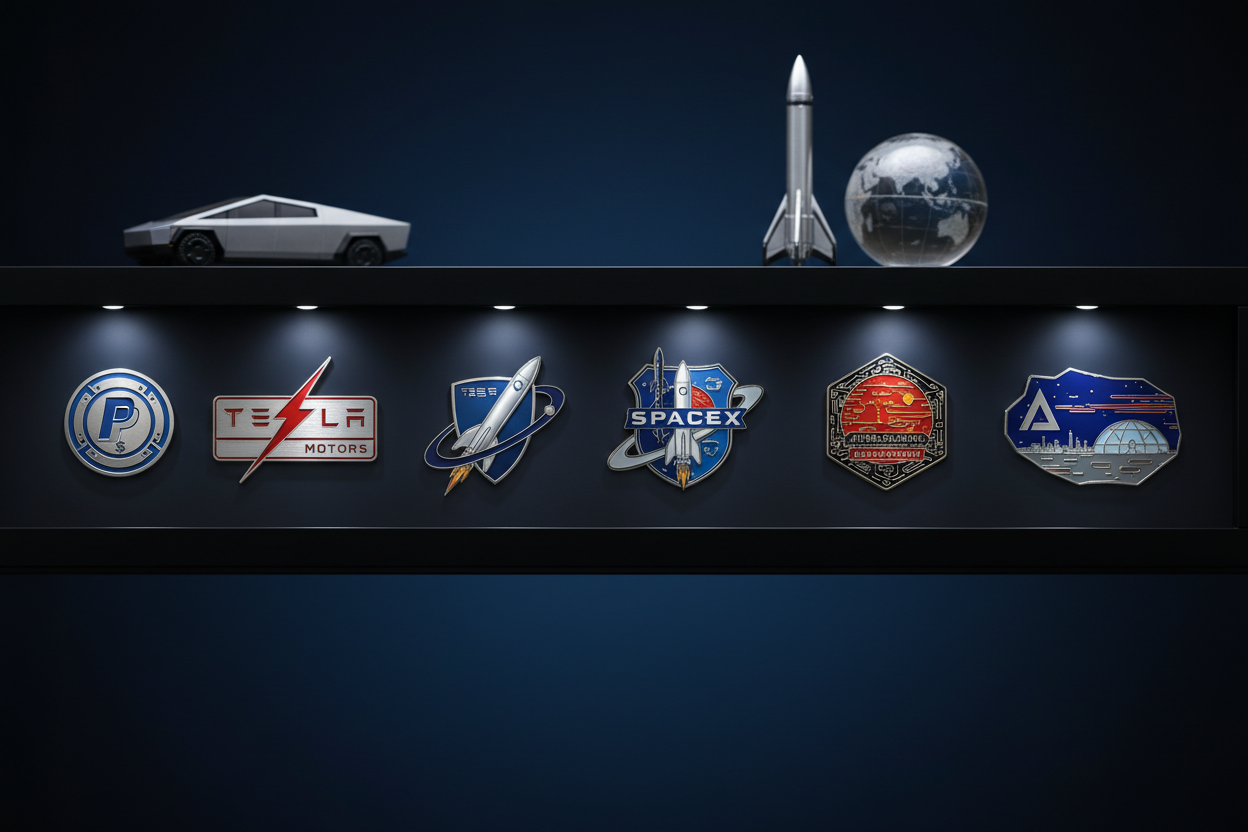
The earliest Elon Musk collectible badges emerged during the late 1990s and early 2000s, coinciding with his involvement in PayPal and the dot-com boom. These initial designs were refreshingly straightforward, often featuring basic text layouts with minimal graphics. The aesthetic reflected the utilitarian design philosophy that would later become synonymous with Musk’s approach to product development.
During this period, badge designs typically incorporated clean typography and simple geometric shapes. Colors were often limited to basic palettes of blue, black, and white, reflecting the corporate branding of early internet companies. The manufacturing quality was standard for the era, with most badges produced using traditional enamel-on-metal techniques that had been industry staples for decades.
What’s particularly interesting about these early designs is their focus on text over imagery. Unlike celebrity memorabilia that might feature photographs or portraits, early Musk badges emphasized company logos and inspirational quotes. This approach would prove prophetic, as it established a pattern of celebrating ideas and achievements rather than personality cult worship.

The Tesla Revolution: Automotive-Inspired Design Language
The launch of Tesla Motors marked a significant turning point in Elon Musk collectible badge design. As the company began producing its first vehicles, badge designs started incorporating automotive elements that reflected the sleek, minimalist aesthetic that would define Tesla’s brand identity.
Badge designers began experimenting with curved lines and aerodynamic shapes that echoed the Model S’s distinctive silhouette. The color palette expanded dramatically during this period, introducing the now-iconic Tesla red alongside sophisticated metallics and gradients. Manufacturing techniques also evolved, with many badges featuring multi-layered construction and premium materials like brushed aluminum and high-grade plastics.
The Tesla era also introduced the concept of limited edition releases tied to specific vehicle launches or company milestones. These special editions often featured unique design elements like holographic surfaces, embedded LED lights, or materials sourced from actual Tesla vehicles. Collectors began to see these badges not just as memorabilia, but as investment pieces with potential long-term value.
Perhaps most significantly, this period saw the emergence of design elements that would become recurring themes in Musk-related collectibles: lightning bolts symbolizing electric power, planetary motifs hinting at broader ambitions, and geometric patterns suggesting precision engineering.
SpaceX and the Space Age Aesthetic
The founding and rapid growth of SpaceX introduced an entirely new design vocabulary to Elon Musk collectible badges. Space exploration themes brought with them a rich visual heritage dating back to NASA’s golden age, but modern badge designers found ways to reinterpret these classic elements for contemporary collectors.
SpaceX-themed badges began incorporating stellar imagery, rocket silhouettes, and orbital mechanics diagrams. The color palette shifted toward deep space blues, cosmic purples, and the stark contrast of black and white that characterizes space photography. Manufacturing innovations during this period included glow-in-the-dark elements, textured surfaces that mimicked lunar regolith, and even badges containing actual meteorite fragments.
The design philosophy also became more ambitious, with badges featuring complex multi-panel layouts that told visual stories of mission progression or technological achievement. Some designs incorporated QR codes linking to mission footage or technical specifications, bridging the gap between physical collectibles and digital content.
This era also saw the introduction of mission-specific badges that commemorated particular SpaceX achievements. Each successful launch, landing, or milestone generated unique collectible designs that captured the specific technical and emotional significance of the moment. Collectors began organizing their collections around mission chronologies, creating personal museums of space exploration progress.
Modern Era: Neuralink, Twitter, and Technological Convergence
The most recent phase in Elon Musk collectible badge evolution reflects his expanding portfolio of ventures and his growing influence across multiple industries. Neuralink’s brain-computer interface technology has introduced cyberpunk aesthetics and neural network imagery into badge designs. Twitter’s acquisition brought social media iconography and bird motifs into the mix, while continued developments at Tesla and SpaceX have pushed design boundaries even further.
Contemporary badge designs often feature augmented reality components, allowing collectors to unlock digital content by scanning physical badges with smartphone apps. Manufacturing has embraced cutting-edge techniques like 3D printing, laser etching, and even biotechnology-inspired materials that change color based on temperature or light exposure.
The design language has become increasingly sophisticated, with badges serving as miniature works of art that incorporate multiple visual themes simultaneously. A single badge might feature automotive elements from Tesla, space imagery from SpaceX, neural network patterns from Neuralink, and social media iconography from Twitter, all unified by consistent typography and color theory.
Perhaps most importantly, modern Musk collectible badges have begun incorporating sustainability themes that reflect his environmental advocacy. Many are now produced using recycled materials, renewable energy sources, or carbon-neutral manufacturing processes, making the collecting hobby itself a statement about environmental responsibility.
Manufacturing and Material Innovation
The evolution of Elon Musk collectible badges wouldn’t be complete without examining the remarkable advances in manufacturing techniques and materials that have enabled increasingly sophisticated designs. Early badges relied on traditional stamping and enameling processes that limited design complexity and color options.
Modern production techniques have revolutionized what’s possible in badge design. Laser cutting allows for incredibly precise geometric patterns, while 3D printing enables complex sculptural elements that would have been impossible to manufacture economically just a decade ago. Digital printing technology has eliminated color limitations, allowing for photorealistic imagery and complex gradients.
Material innovation has been equally impressive. Contemporary badges might incorporate carbon fiber from Tesla vehicles, titanium alloys used in SpaceX rockets, or even experimental materials developed for Neuralink applications. Some limited editions feature materials with genuine connections to Musk’s companies, such as metal reclaimed from prototype vehicles or components from retired rocket engines.
The integration of electronics has opened entirely new design possibilities. LED-equipped badges can display animated sequences, while NFC chips enable digital authentication and unlock exclusive online content. Some badges even incorporate miniature sensors that respond to environmental conditions, creating dynamic collectibles that change appearance based on their surroundings.
Collector Community and Cultural Impact
The design evolution of Elon Musk collectible badges has been shaped not just by technological advancement, but by the passionate community of collectors who drive demand for innovation and quality. This community has grown from a small group of early adopters to a global network of enthusiasts who share a fascination with technology, entrepreneurship, and futuristic thinking.
Collector feedback has directly influenced design trends, with manufacturers responding to community preferences for specific themes, materials, or manufacturing techniques. Social media platforms have enabled collectors to share their collections, discuss design elements, and even collaborate with manufacturers on limited edition releases.
The cultural impact extends beyond the collecting community itself. These badges have become conversation starters, educational tools, and symbols of technological optimism. They’re worn at technology conferences, displayed in offices, and given as gifts to inspire the next generation of innovators and entrepreneurs.
Educational institutions have even begun incorporating collectible badges into STEM programs, using them as tangible rewards for student achievements in science, technology, engineering, and mathematics. This application has influenced design trends toward more educational content, with badges featuring technical diagrams, scientific formulas, or inspirational quotes about innovation and perseverance.
Future Trends and Predictions
Looking ahead, the design evolution of Elon Musk collectible badges shows no signs of slowing down. Emerging technologies promise to enable even more innovative approaches to collectible design and manufacturing. Artificial intelligence is beginning to influence design processes, creating patterns and compositions that human designers might never have conceived.
Blockchain technology and NFTs are creating new hybrid collectibles that exist simultaneously in physical and digital realms. Future badges might include blockchain authentication, digital twins, or even the ability to evolve their appearance over time based on real-world events or achievements.
Sustainability will likely become an even more prominent theme, with manufacturers exploring biodegradable materials, closed-loop production processes, and designs that actively contribute to environmental restoration. Some conceptual designs already incorporate living materials like algae or fungi that could make badges truly dynamic, growing and changing throughout their lifespan.
As Musk’s ventures expand into new territories, badge designs will undoubtedly follow. Future Mars missions could introduce actual Martian materials into collectible production, while advances in artificial intelligence might enable badges that can hold conversations or provide personalized information to their owners.
Conclusion: A Mirror of Innovation
The design evolution of Elon Musk collectible badges tells a fascinating story that extends far beyond simple memorabilia. These small objects serve as tangible representations of humanity’s technological progress, entrepreneurial spirit, and boundless ambition to solve complex problems and explore new frontiers.
From humble beginnings as simple text-based designs to today’s sophisticated, technology-enhanced collectibles, these badges have consistently pushed the boundaries of what’s possible in small-scale manufacturing and design. They’ve embraced new materials, incorporated cutting-edge technology, and responded to the evolving needs and interests of a passionate collector community.
Perhaps most importantly, they’ve maintained a connection to the core values and vision that drive Elon Musk’s various enterprises: innovation, sustainability, and the belief that technology can be a force for positive change in the world. As we look toward the future, these collectible badges will undoubtedly continue to evolve, serving as both historical artifacts of our current technological moment and inspiration for the innovations yet to come.
For collectors, designers, and technology enthusiasts alike, Elon Musk collectible badges represent more than just objects to be acquired and displayed. They’re symbols of human ingenuity, reminders of what’s possible when we dare to think differently, and tangible connections to a future that’s being built one breakthrough at a time.
Own a Piece of the Revolution – The Elon Musk Tribute Badge
While politicians talk and bureaucrats delay, Elon Musk builds. He made electric cars mainstream, revolutionized space travel, and defended free speech on a global stage. This isn’t just a collectible. It’s a symbol of American innovation, self-reliance, and the courage to act.
Crafted from military-grade alloy with precision 3D engraving, this limited-edition badge features Elon’s portrait alongside the iconic logos of SpaceX, Tesla, and X. Only 250 exist worldwide. No reruns. No second chances.
Whether on your desk, workshop wall, or display case, it’s a daily reminder: The future isn’t coming. You build it. Now.