The Future of Work: How Inspirational Decor Shapes Productivity
 By
By
The Future of Work: How Inspirational Decor Shapes Productivity
Picture this: you walk into your workspace, and instead of feeling dread or boredom, you’re immediately energized by what surrounds you. The colors speak to your creativity, the artwork sparks new ideas, and every element in your environment seems designed to bring out your best work. This isn’t just wishful thinking—it’s the reality that more companies and remote workers are creating through thoughtful, inspirational decor.
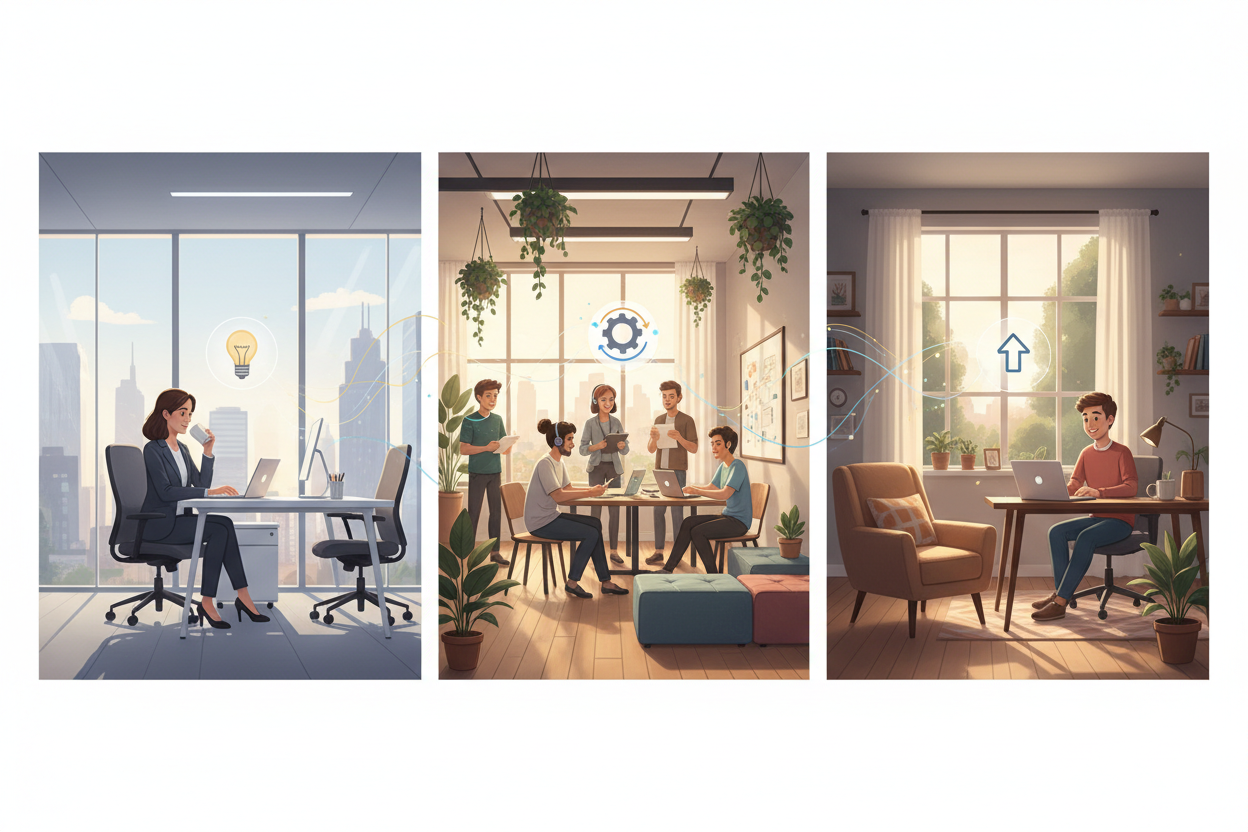
As we navigate the evolving landscape of modern work, from traditional offices to hybrid models and fully remote setups, one thing has become crystal clear: our physical environment profoundly impacts our mental state, creativity, and overall productivity. The future of work isn’t just about flexible schedules and digital tools—it’s about creating spaces that inspire us to do our best work, whether that’s in a corporate headquarters or a home office converted from a spare bedroom.
The Psychology Behind Workspace Design and Productivity
There’s real science behind why that motivational poster on your wall might actually be helping you power through your afternoon slump. Environmental psychology has shown us that our surroundings directly influence our cognitive function, emotional well-being, and work performance. When we’re in spaces that feel inspiring and personally meaningful, our brains respond by releasing dopamine and other feel-good chemicals that enhance focus and creativity.
Research from Harvard Business School found that employees working in well-designed, aesthetically pleasing environments showed a 15% increase in productivity compared to those in stark, uninspiring spaces. But here’s what’s fascinating: the definition of “inspiring” varies dramatically from person to person. What motivates a graphic designer might overwhelm an accountant, and what energizes a morning person could distract a night owl.
The key lies in understanding how different design elements affect our psychological state. Colors can influence mood and energy levels—blues and greens tend to promote calm focus, while warmer tones like orange and yellow can stimulate creativity and enthusiasm. Natural elements, even something as simple as a small plant or a nature photograph, can reduce stress hormones and improve concentration by up to 25%.
Remote Work Revolution: Personalizing Your Home Office for Maximum Impact
The shift to remote work has given millions of people unprecedented control over their work environment. Suddenly, we’re not stuck with generic office furniture and fluorescent lighting—we can create spaces that truly reflect who we are and how we work best. This freedom has sparked a home office revolution, with people discovering just how much their surroundings affect their daily performance.
Creating an inspiring home workspace starts with understanding your own work style and personality. Are you someone who thrives in minimalist, clutter-free environments, or do you find energy in organized chaos with personal mementos and vibrant colors? Do you need complete silence to concentrate, or does a bit of visual stimulation help keep your mind engaged during long tasks?
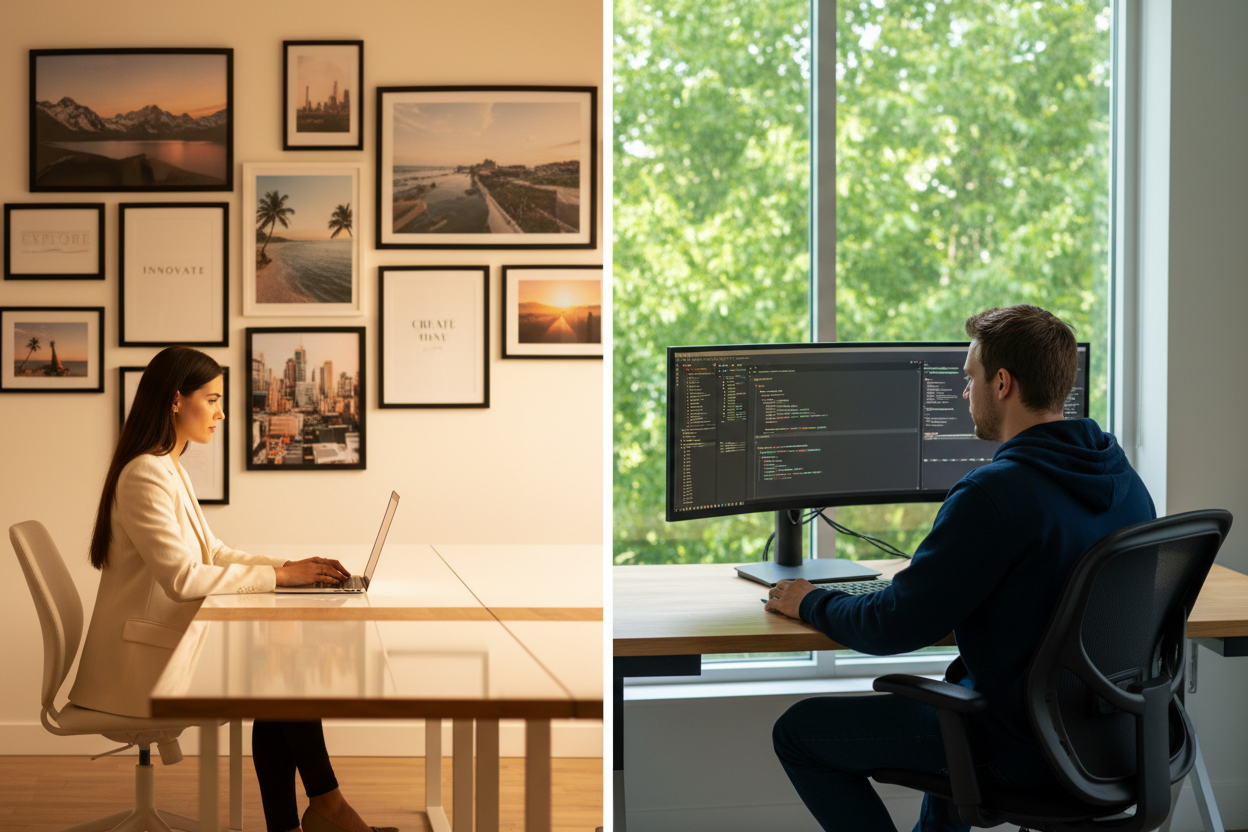
One remote marketing manager I spoke with transformed her productivity by replacing her blank white walls with a carefully curated gallery of travel photos and inspirational quotes. She found that having visual reminders of her goals and experiences helped her stay motivated during challenging projects. Another software developer discovered that positioning his desk near a window with a view of trees dramatically improved his ability to solve complex problems—the brief moments of looking up and seeing nature helped reset his mind between coding sessions.
The beauty of remote work is that you can experiment freely. Try different lighting setups, rearrange furniture, add plants, or change your wall art seasonally. Pay attention to how these changes affect your energy, focus, and overall job satisfaction. Your home office should evolve with your needs and preferences.
Corporate Spaces: Modern Workplace Design Trends That Boost Employee Engagement
Forward-thinking companies are recognizing that their office design is a powerful tool for attracting and retaining talent. The days of identical cubicles and beige walls are giving way to thoughtfully designed spaces that reflect company values and support diverse work styles. These modern workplaces are less about impressing visitors and more about creating environments where employees genuinely want to spend their time.
Biophilic design has emerged as one of the most effective trends in corporate workspace design. This approach integrates natural elements throughout the office—living walls, natural lighting, water features, and organic shapes and materials. Companies implementing biophilic design report significant improvements in employee well-being, creativity, and retention rates. Google’s offices famously incorporate everything from indoor trees to meditation gardens, recognizing that connection to nature is fundamental to human productivity and happiness.
Flexible workspace design is another game-changer. Instead of assigning everyone the same type of desk and chair, progressive companies are creating variety—quiet focus pods for deep work, collaborative spaces with writable walls and comfortable seating, standing desk options, and even relaxation areas where employees can recharge. This acknowledges that different tasks require different environments and that people have varying preferences for how they work best.
Color psychology is being applied more strategically in office design. Many companies are moving away from the traditional corporate palette of grays and blues, instead incorporating energizing colors in specific zones. Meeting rooms might feature warm, collaborative colors like orange or yellow, while focus areas use calming greens and blues. Break rooms and social spaces often incorporate more vibrant, playful colors to encourage relaxation and informal interaction.
The Science of Color, Lighting, and Natural Elements in Workspace Productivity
Understanding the science behind environmental factors can help you make informed decisions about your workspace design, whether you’re decorating a home office or planning a corporate renovation. Lighting, in particular, has a profound impact on both productivity and well-being that goes far beyond simply being able to see your work clearly.
Natural light exposure helps regulate our circadian rhythms, which control everything from alertness to mood to immune function. Workers with access to natural light report better sleep quality, increased energy, and improved overall health. When natural light isn’t available, full-spectrum LED lighting that mimics sunlight can provide similar benefits. Many people find that adjustable lighting systems, which can be brightened for detailed tasks and dimmed for creative work, help them maintain optimal focus throughout the day.
The presence of plants and natural elements in workspaces isn’t just aesthetically pleasing—it’s scientifically proven to enhance cognitive function. Studies have shown that having plants in view can improve memory retention by up to 20% and increase creativity scores significantly. Even images of nature can have positive effects, though live plants provide additional benefits like improved air quality and humidity regulation.
Temperature and air quality also play crucial roles in productivity. Research indicates that the optimal temperature for most office work falls between 68-72 degrees Fahrenheit, with productivity declining significantly when temperatures move outside this range. Good ventilation and air circulation are equally important—stuffy environments can reduce cognitive performance by up to 15%.
Technology Integration: Smart Decor Solutions for Future Workspaces
The future of workspace design isn’t just about choosing the right colors and furniture—it’s about integrating technology seamlessly into our environments to create truly adaptive, responsive spaces. Smart decor solutions are emerging that can automatically adjust lighting, temperature, and even visual elements based on the time of day, type of work being performed, or individual preferences.
Programmable LED lighting systems can now shift color temperature throughout the day to support natural circadian rhythms—cooler, brighter light in the morning to promote alertness, and warmer tones in the evening to prevent disruption of sleep cycles. Some systems even integrate with calendar applications, automatically adjusting the environment based on scheduled activities.
Digital art displays are becoming more sophisticated and affordable, allowing people to change their wall art based on mood, season, or inspiration needs. Imagine having motivational imagery during challenging projects, calming landscapes during stressful periods, or energizing abstract art when you need a creativity boost—all controlled by voice commands or smartphone apps.
Sound masking technology is evolving beyond simple white noise machines. New systems can create customized soundscapes that promote different types of thinking—nature sounds for creative work, rhythmic patterns for repetitive tasks, or complete silence for deep concentration. These systems can even adapt to open office environments, creating personal sound zones without disturbing nearby colleagues.
Measuring Success: How to Track the Impact of Inspirational Decor on Your Work Performance
Creating an inspiring workspace is an investment in your productivity and well-being, but how do you know if your efforts are actually paying off? Measuring the impact of environmental changes requires a combination of objective metrics and subjective awareness of your own experience.
Start by establishing baseline measurements before making significant changes to your workspace. Track metrics that matter to your specific role—this might include tasks completed per day, creative projects finished, client satisfaction scores, or simply your own energy and mood levels throughout the workday. Many people find it helpful to keep a brief daily log noting their productivity level, stress level, and overall satisfaction with their work environment.
Pay attention to subtle changes in your work habits and preferences. Are you more eager to start work in the morning? Do you find yourself taking fewer breaks, or do you feel more refreshed after breaks? Are you more likely to tackle challenging projects, or do you find yourself procrastinating less on routine tasks? These behavioral changes often indicate that your environment is supporting better work performance.
Consider conducting informal experiments with different design elements. Try working with different lighting setups for a week each, or rotate your wall art monthly to see what types of imagery most effectively inspire you. Document what works and what doesn’t—this personal data will be invaluable as you continue refining your workspace.
For corporate environments, employee surveys and feedback sessions can provide insights into how design changes are affecting team productivity and satisfaction. Look for trends in metrics like employee retention, sick days, and engagement scores alongside productivity measures.
Conclusion: Creating Workspaces That Inspire Excellence
As we look toward the future of work, it’s clear that the most successful individuals and organizations will be those who understand the profound connection between environment and performance. Inspirational decor isn’t just about making spaces look pretty—it’s about creating environments that support our cognitive function, emotional well-being, and creative potential.
Whether you’re working from a corner of your bedroom or designing a corporate headquarters, the principles remain the same: thoughtful attention to color, lighting, natural elements, and personal meaning can dramatically enhance productivity and job satisfaction. The key is recognizing that there’s no one-size-fits-all solution—the most inspiring workspace is one that reflects your unique needs, preferences, and work style.
The future belongs to those who take control of their environment rather than simply accepting whatever space they’re given. By applying the science of environmental psychology and embracing new technologies, we can create workspaces that don’t just house our work—they elevate it. Your workspace should be a partner in your success, a daily source of motivation and energy that helps you produce your best work while feeling genuinely good about the time you spend there.
Start small, experiment freely, and pay attention to how changes in your environment affect your work and well-being. The investment you make in creating an inspiring workspace will pay dividends in productivity, creativity, and overall career satisfaction for years to come.
Own a Piece of the Revolution – The Elon Musk Tribute Badge
While politicians talk and bureaucrats delay, Elon Musk builds. He made electric cars mainstream, revolutionized space travel, and defended free speech on a global stage. This isn’t just a collectible. It’s a symbol of American innovation, self-reliance, and the courage to act.
Crafted from military-grade alloy with precision 3D engraving, this limited-edition badge features Elon’s portrait alongside the iconic logos of SpaceX, Tesla, and X. Only 250 exist worldwide. No reruns. No second chances.
Whether on your desk, workshop wall, or display case, it’s a daily reminder: The future isn’t coming. You build it. Now.