Limited Edition Economics: Understanding Scarcity in Collectible Markets
 By
By
Limited Edition Economics: Understanding Scarcity in Collectible Markets
Have you ever wondered why a simple trading card can sell for thousands of dollars, or why people camp outside stores for limited sneaker releases? The answer lies in one of economics’ most fundamental principles: scarcity. When something becomes rare or difficult to obtain, its perceived value skyrockets, creating fascinating market dynamics that drive entire industries worth billions of dollars.
The collectible market operates on a unique set of economic principles where traditional supply and demand curves take on extraordinary characteristics. Unlike typical consumer goods where increased demand leads to increased production, collectibles thrive precisely because their supply remains intentionally limited. This artificial scarcity creates a psychological and economic phenomenon that transforms ordinary objects into coveted treasures.
The Psychology Behind Collectible Scarcity
Understanding collectible markets requires diving deep into human psychology. When manufacturers announce that only 1,000 units of a particular item will ever be made, they’re not just limiting supply – they’re triggering a primal fear of missing out that drives consumer behavior in powerful ways.
This scarcity mindset taps into our evolutionary programming. Throughout human history, resources were genuinely limited, and those who could secure rare or valuable items often had better survival prospects. Today, while we don’t need limited edition sneakers for survival, our brains still respond to scarcity signals with urgency and desire.

The exclusivity factor also plays a crucial role. Owning something that few others possess provides social status and identity validation. Whether it’s a rare Pokemon card or a limited edition watch, these items become symbols of membership in exclusive clubs, making their owners feel special and distinguished from the masses.
How Artificial Scarcity Drives Market Value
Manufacturers have mastered the art of creating artificial scarcity to maximize profits and maintain brand desirability. This strategy involves deliberately restricting production quantities even when demand far exceeds supply. The result is a market where prices can reach astronomical levels, sometimes hundreds or thousands of times the original retail price.
Take Supreme, the streetwear brand that has turned artificial scarcity into an art form. By releasing small quantities of products weekly and never restocking sold-out items, Supreme has created a secondary market where their simple white t-shirts can sell for several hundred dollars. The brand’s business model proves that scarcity itself can be the primary value proposition.
Similarly, luxury watch manufacturers like Rolex and Patek Philippe maintain waiting lists for their most desirable models, sometimes spanning years. This controlled scarcity ensures that demand consistently outpaces supply, maintaining high prices and brand prestige. The longer the wait, the more desirable the product becomes, creating a self-reinforcing cycle of value appreciation.
Case Studies in Collectible Market Economics
The sports card industry provides one of the most dramatic examples of scarcity economics in action. During the 1990s, card companies flooded the market with products, leading to oversaturation and collapsed values. Learning from this mistake, modern card manufacturers now produce limited print runs with various scarcity levels, from common cards to ultra-rare parallels numbered to just a few copies.
This tiered scarcity system creates multiple price points within single products. A common card might be worth pennies, while a one-of-one parallel of the same player could sell for tens of thousands of dollars. The extreme scarcity of these rare variants drives collectors to purchase numerous packs, hoping to strike gold, generating significant revenue for manufacturers.
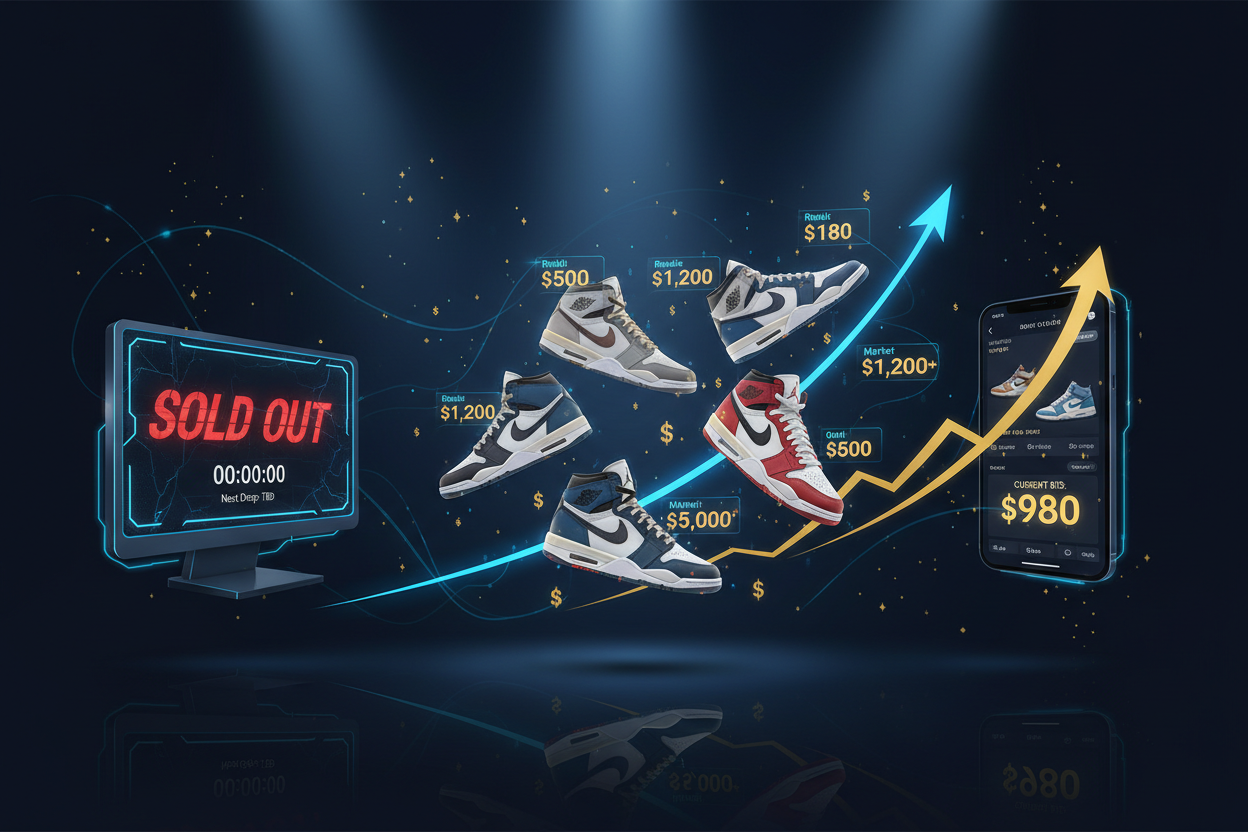
The sneaker market tells a similar story. Nike’s Air Jordan brand releases limited quantities of retro models and new colorways, often selling out within minutes online. The immediate sellout creates a secondary market on platforms like StockX and GOAT, where prices can double or triple overnight. Some rare Jordan releases have appreciated faster than traditional investments, with certain pairs gaining hundreds of percent in value within months.
Digital Scarcity and NFTs: The New Frontier
The digital age has introduced entirely new forms of artificial scarcity through blockchain technology and non-fungible tokens (NFTs). Unlike physical collectibles, digital items can theoretically be copied infinitely, making scarcity purely artificial and dependent on agreed-upon protocols.
NFT projects like CryptoPunks and Bored Ape Yacht Club have demonstrated that digital scarcity can command the same premium prices as physical collectibles. By limiting the total supply to specific numbers – 10,000 CryptoPunks, for example – creators establish scarcity in the digital realm. The blockchain serves as a permanent ledger proving ownership and authenticity, essential elements for maintaining value in collectible markets.
This digital scarcity model has expanded beyond art into gaming, where rare in-game items and characters can sell for substantial sums. Players invest heavily in acquiring limited edition skins, weapons, or characters, treating them as both functional game elements and collectible investments.
Market Manipulation and Speculation Risks
While scarcity drives legitimate value in many collectible markets, it also creates opportunities for manipulation and speculation that can harm both collectors and investors. Pump-and-dump schemes, where groups artificially inflate prices before selling, are common in newer collectible markets, particularly in digital spaces.
The Pokemon card market experienced significant manipulation during the 2020-2021 boom when social media influencers and celebrities drove unprecedented interest. Prices reached unsustainable levels before crashing back down, leaving many late investors with significant losses. This volatility highlights the speculative nature of collectible markets and the risks associated with artificial scarcity.
Counterfeiting represents another major risk in scarcity-driven markets. As prices increase, the incentive to create fake versions grows proportionally. High-end collectible markets now require sophisticated authentication services, adding costs and complexity to transactions while highlighting the fragility of value based primarily on scarcity.
Investment Considerations in Collectible Markets
For those considering collectibles as investments, understanding scarcity economics is crucial but not sufficient. Successful collectible investing requires deep market knowledge, authentication expertise, and careful consideration of long-term trends versus short-term hype.
Diversification becomes particularly important in collectible markets due to their volatility and illiquidity. Unlike stocks or bonds, collectibles can’t be easily sold at market prices, and finding buyers for high-value items can take considerable time. The transaction costs, including authentication, insurance, and platform fees, can significantly impact returns.
Market timing plays a crucial role in collectible investing success. Buying during peak hype often leads to losses, while identifying emerging trends early can generate substantial returns. However, predicting which collectibles will maintain long-term value requires understanding not just scarcity but also cultural relevance, brand strength, and demographic trends.
The Future of Scarcity in Collectible Markets
As technology continues evolving, the nature of scarcity in collectible markets will likely transform significantly. Blockchain technology may enable new forms of verified digital scarcity, while artificial intelligence could help identify and prevent market manipulation.
Generational changes will also impact collectible markets substantially. Younger collectors, more comfortable with digital ownership and virtual goods, may drive growth in digital collectibles while traditional physical markets might face declining interest. Understanding these demographic shifts is crucial for predicting future market directions.
Regulatory developments, particularly around digital collectibles and NFTs, could significantly impact how scarcity is created and maintained in these markets. Government oversight might limit certain artificial scarcity practices while providing greater consumer protection and market stability.
The collectible market’s relationship with scarcity reveals fundamental truths about human psychology, economic behavior, and value creation. While artificial scarcity can create substantial wealth for both manufacturers and collectors, it also introduces significant risks and ethical considerations. Understanding these dynamics is essential for anyone participating in collectible markets, whether as a passionate collector, serious investor, or curious observer of modern economic phenomena.
As we move forward, the most successful participants in collectible markets will be those who can balance appreciation for scarcity-driven value with realistic assessment of underlying worth and long-term sustainability. The magic of limited edition economics will undoubtedly continue captivating markets, but informed participants will always have the advantage in navigating these fascinating and complex economic waters.
Own a Piece of the Revolution – The Elon Musk Tribute Badge
While politicians talk and bureaucrats delay, Elon Musk builds. He made electric cars mainstream, revolutionized space travel, and defended free speech on a global stage. This isn’t just a collectible. It’s a symbol of American innovation, self-reliance, and the courage to act.
Crafted from military-grade alloy with precision 3D engraving, this limited-edition badge features Elon’s portrait alongside the iconic logos of SpaceX, Tesla, and X. Only 250 exist worldwide. No reruns. No second chances.
Whether on your desk, workshop wall, or display case, it’s a daily reminder: The future isn’t coming. You build it. Now.